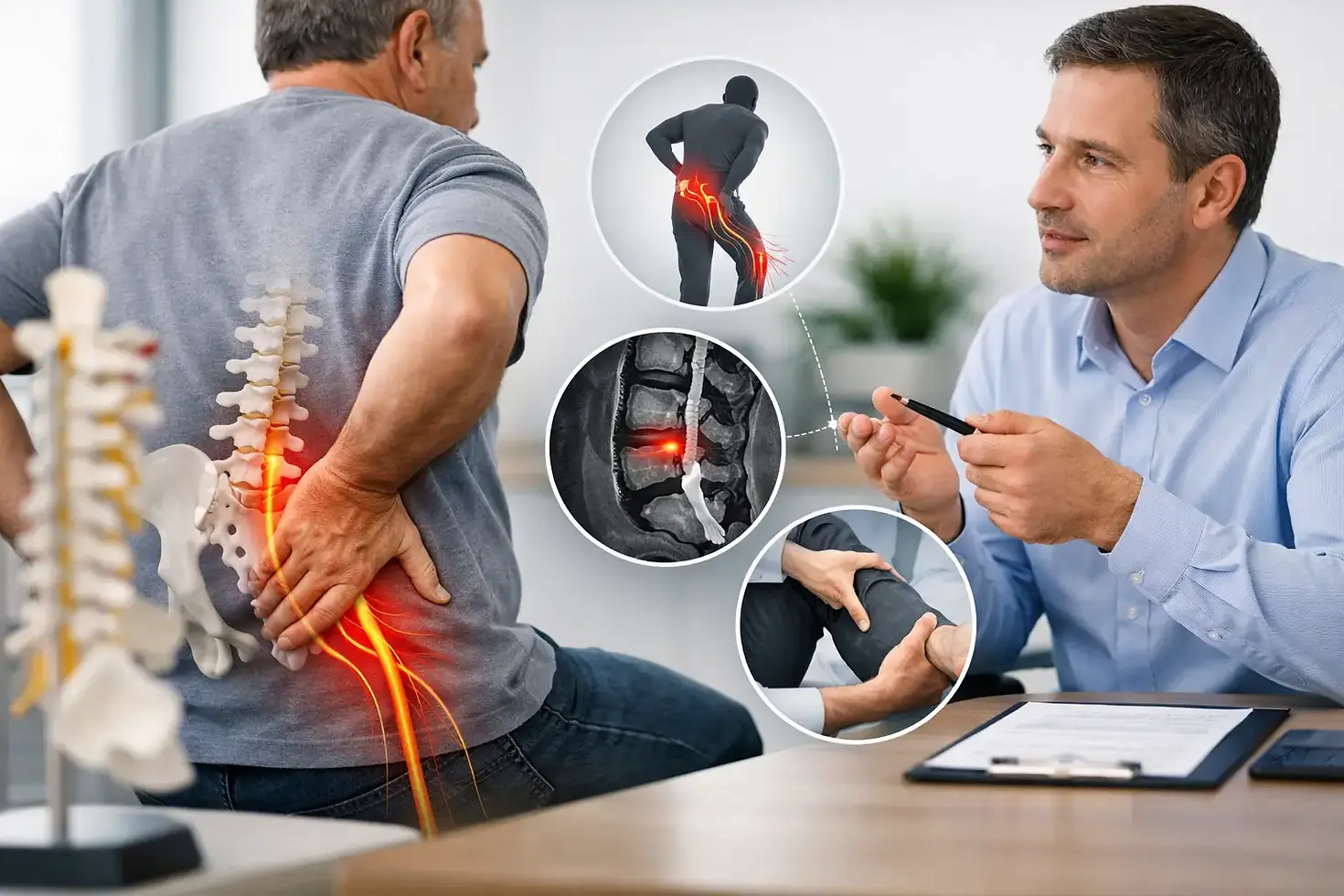
Sciatica Relief Starts With the Right Questions

That sharp, electric pain traveling from the low back into the hip, leg, or foot can make ordinary moments feel uncertain. Getting out of the car, standing at the kitchen counter, or sleeping through the night may suddenly require careful planning. Sciatica is not simply “back pain.” It is a pattern of symptoms that deserves thoughtful attention, especially when it keeps returning or begins to limit the life you want to live.
The encouraging news is that many people can improve with conservative, personalized care. Relief often starts by looking beyond the painful area and asking a better question: what is placing stress on the nerve, and what does your body need to recover?
What sciatica actually means
Sciatica describes pain, tingling, numbness, or weakness that follows the path of the sciatic nerve. This large nerve begins in the lower back, travels through the buttock, and branches down each leg. Symptoms usually affect one side, though the exact location and intensity can vary widely.
For one person, sciatica may feel like a deep ache in the buttock after sitting. For another, it may be burning pain down the back of the thigh or pins and needles in the calf and foot. Some people primarily notice weakness, such as difficulty lifting the front of the foot or rising onto the toes.
The nerve itself is not always the original problem. Sciatica is a signal that nerve tissue may be irritated, compressed, inflamed, or sensitized somewhere along its pathway. That distinction matters because lasting improvement depends on identifying the factors involved rather than only chasing pain from day to day.
Why sciatica happens
A herniated or bulging disc in the lumbar spine is a common cause. Discs cushion the bones of the spine, and changes in a disc can irritate a nearby nerve root. Spinal narrowing, often called stenosis, can also reduce the space around nerves. Arthritis-related changes, a previous injury, pregnancy-related body changes, and muscle tension around the hip may contribute as well.
Not every case begins with one dramatic event. Long hours of sitting, repetitive lifting, a sudden jump in exercise, poor sleep, ongoing stress, and reduced core or hip stability can all influence how the low back and pelvis handle load. A painful flare may be the final straw rather than the entire story.
There is also an important trade-off to understand: rest can calm a severe flare briefly, but too much inactivity may lead to stiffness, loss of confidence, and more sensitivity with movement. Pushing through sharp or escalating pain is not helpful either. The best approach is usually gradual, guided movement that respects your current limits while rebuilding capacity.
When sciatica needs urgent medical care
Most sciatica is not an emergency, but certain symptoms should never be managed by waiting it out. Seek urgent medical evaluation if you experience:
New loss of bladder or bowel control
Numbness in the groin, inner thighs, or saddle area
Significant or rapidly worsening leg weakness
Severe pain after a major fall, accident, or other trauma
Fever, unexplained weight loss, history of cancer, or pain that is constant and unrelenting
These signs can point to conditions that need prompt conventional medical assessment. Integrative care works best alongside appropriate diagnosis and referral, not in place of urgent care when red flags are present.
Gentle movement can be part of healing
When pain is intense, the temptation is to stop moving completely. Yet the body often responds well to small, consistent doses of comfortable movement. Short walks, frequent position changes, and gentle mobility work may reduce stiffness and remind the nervous system that movement can be safe.
The right exercises depend on the pattern of your symptoms. Some people feel better bending forward, while others find extension-based movements more comfortable. This is why a generic stretching routine can be disappointing or even aggravating. An exercise that helps your neighbor may not be the one your body needs.
Pay attention to the 24-hour response. Mild discomfort during activity that settles quickly may be acceptable for some people, but pain that shoots farther down the leg, creates new numbness, or leaves you significantly worse the next day is a sign to scale back and seek professional guidance. Progress is rarely a straight line. It is built through steady, appropriate steps.
A whole-body approach to sciatica relief
Because sciatica can involve inflammation, muscle guarding, nervous system sensitivity, and movement compensation, a one-size-fits-all plan often falls short. A whole-body approach considers both the immediate pain and the conditions that may be keeping it active.
Acupuncture is one non-invasive option many people explore for low back pain and radiating leg discomfort. Very fine needles are used at selected points to support the body’s pain-modulating processes, circulation, and relaxation response. Treatment plans are individualized, and many patients find acupuncture sessions calming as well as restorative.
Chinese medical massage, also known as Tui Na, may be used to address areas of muscular tension and restricted movement around the low back, hips, and legs. Cupping, gentle heat therapies such as moxibustion, or laser acupuncture may also be appropriate in certain situations. The goal is not to force the body to relax. It is to reduce protective tension and create a more supportive environment for healing.
Your daily habits matter, too. Hydration, nourishing meals, adequate protein, sleep quality, stress load, and recovery from exercise can all affect inflammation and tissue repair. When symptoms have lingered, nutritional and lifestyle support can be a meaningful part of a broader plan. This does not mean sciatica is “all in your head” or caused by one imperfect habit. It means your whole system deserves care.
What to expect from personalized care
A thoughtful evaluation should begin with listening. When did symptoms begin? What positions worsen or ease them? Is pain moving farther down the leg, or beginning to centralize closer to the back? Are there training demands, work habits, stressors, old injuries, or sleep issues that may be affecting recovery?
At The Point Acupuncture Clinic, care is designed around your individual pattern rather than a generic protocol. Depending on your needs, treatment may combine acupuncture with bodywork, nutritional guidance, and supportive therapies intended to help you move with greater comfort and confidence. When imaging, physical therapy, medication, or medical evaluation is appropriate, coordinated care can provide the clearest path forward.
It is also reasonable to have realistic expectations. Some acute cases settle quickly, while chronic or recurring symptoms may require a longer process. The aim is not merely to get through one better day. It is to help your body regain resilience, reduce the fear of movement, and support the habits that make future flares less likely.
Small changes that protect your back and legs
You do not need to overhaul your life while you are hurting. Start with changes that reduce unnecessary strain. Break up long periods of sitting, especially if symptoms increase in a chair. Use a supportive position for sleep, and consider a pillow between the knees when side sleeping or beneath the knees when lying on your back.
When lifting, keep objects close to your body and avoid twisting under load. Return to strength training gradually once symptoms allow, with attention to hip, core, and leg control rather than rushing back to previous weights. If your work requires driving, lifting, or standing for long stretches, planned movement breaks can make a genuine difference.
Most of all, listen without becoming fearful. Pain is information, but it does not have to become your identity. With the right support, many people find they can return to the walks, workouts, workdays, and restful nights that pain had put on hold. You deserve a life with more ease, more confidence, and more room to reclaim your vitality.


Comments