
Physical Stress vs Emotional Stress

Your shoulders feel tight, your sleep is off, and your patience is thinner than usual. Maybe it started after a hard workout, a long week of poor sleep, a family conflict, or months of pushing through pain. When people compare physical stress vs emotional stress, they often assume the body can tell the difference clearly. In real life, those lines blur fast.
The body responds to both kinds of stress as a call to adapt. That is useful in short bursts. It helps you recover from a demanding run, stay alert during a difficult conversation, or get through a packed season of life. The problem starts when the stress keeps coming and the body never gets a real chance to reset.
Physical stress vs emotional stress: what changes in the body?
Physical stress usually begins with a tangible demand on the body. That might be overtraining, an injury, inflammation, illness, poor posture, chronic pain, surgery, lack of sleep, blood sugar swings, or even not eating enough to support your activity level. It has a mechanical or biological starting point, even if the effects spread far beyond the original issue.
Emotional stress often starts with perception and experience. Relationship strain, grief, financial pressure, caregiving, work overload, trauma, uncertainty, and chronic worry can all activate the same stress pathways. Even when there is no visible injury, the nervous system still reads emotional strain as something that requires protection and adaptation.
In both cases, stress hormones rise, muscles tighten, digestion may slow down, sleep can become lighter, and pain sensitivity often increases. That overlap is why so many people say, "I do not know if this is mental or physical anymore." Often, it is both.
What differs is the doorway in. Physical stress tends to enter through the tissues, immune system, metabolism, or structural strain. Emotional stress tends to enter through the nervous system, thoughts, memories, and lived experience. But once stress is ongoing, each one can trigger the other. Pain makes people anxious. Anxiety creates tension, fatigue, headaches, and digestive upset. A body under strain can shape emotions, and emotional strain can absolutely shape the body.
How physical stress shows up
Physical stress is not limited to intense exercise or obvious injury. Sometimes it builds quietly through daily habits and repeated strain. Sitting in one position for hours, clenching your jaw, skipping recovery, relying on caffeine while under-sleeping, or living with low-grade inflammation can all keep the body in a stressed state.
Common signs include muscle tightness, frequent headaches, fatigue that does not improve with rest, digestive disruption, slower workout recovery, increased pain, lowered resilience, and a sense that the body is always bracing. Some people also notice more frequent colds, cycle irregularity, or feeling wired and tired at the same time.
Physical stress can be easier to validate because it feels concrete. If your back hurts, your neck is stiff, or you are exhausted after weeks of poor sleep, there is something obvious to point to. But that does not always make it simple. Two people can have the same physical workload and very different stress responses depending on inflammation, hormone balance, nutrition, past injuries, and nervous system capacity.
How emotional stress shows up
Emotional stress is sometimes dismissed because it cannot always be seen on a scan or measured with a single lab value. Yet it can be deeply physical in its effects. A tense chest, stomach knots, racing thoughts at 2 a.m., irritability, shallow breathing, and a flare in chronic pain are all common signs.
For some people, emotional stress looks like anxiety. For others, it shows up as brain fog, exhaustion, low motivation, snapping at loved ones, stress eating, missing periods, or feeling emotionally numb. The body may stay on high alert even when there is no immediate crisis.
This is where a root-cause perspective matters. Emotional stress is not "just in your head." It can alter sleep quality, digestion, muscle tone, hormonal rhythms, and inflammatory patterns. If you have ever gone through a hard season and suddenly developed migraines, IBS symptoms, jaw pain, or fatigue, you have felt that mind-body connection firsthand.
Why physical stress vs emotional stress is not an either-or question
Many people want to know which type of stress they have because they hope the answer will make treatment more straightforward. Sometimes it does. If your symptoms began after an accident or a major loss, the starting point may be clear. But long-term stress patterns usually become layered.
A runner with knee pain may also be carrying work burnout. A woman dealing with PMS, insomnia, and anxiety may also be undernourished and overextended. Someone recovering from an illness may be physically depleted and emotionally unsettled by months of uncertainty. Treating only one side can leave the deeper pattern untouched.
This is why symptom suppression often falls short. If emotional strain is feeding muscle tension and poor sleep, addressing pain alone may bring only temporary relief. If physical inflammation is draining your resilience, stress-management advice may help, but not enough. True healing usually asks a broader question: what is keeping your system from feeling safe, nourished, and able to recover?
The nervous system is the bridge
The nervous system is where physical and emotional stress often meet. It monitors internal signals, external demands, and perceived threats, then adjusts heart rate, digestion, muscle tone, energy output, and hormone signaling. When stress is brief, this system is adaptive. When stress becomes constant, the body can lose flexibility.
That loss of flexibility matters. You may feel stuck in fight-or-flight, or you may swing into shutdown and exhaustion. You may have trouble sleeping even when you are tired. You may react strongly to minor triggers, physically or emotionally. Pain can become more persistent not only because tissues are irritated, but because the whole system has become more reactive.
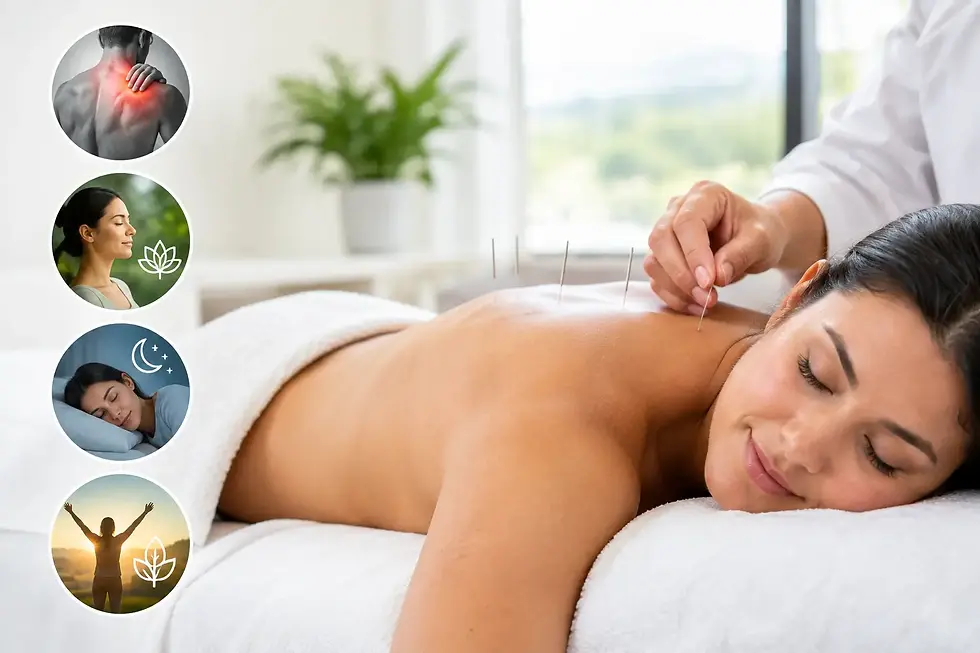
A calming, restorative treatment plan aims to support that regulation. This is one reason people often seek acupuncture and integrative care when they feel like their body is no longer bouncing back the way it should. They are not imagining it. Their system may be asking for a different kind of support.
What helps when stress is affecting your health
The most effective approach depends on what is driving your symptoms, and that is where nuance matters. More exercise is not always the answer if your body is already depleted. More rest is not always enough if emotional tension is keeping your system activated. Generic self-care can help, but persistent stress patterns usually respond better to personalized care.
Start by looking at the full picture. When did symptoms begin? What makes them worse? Are you dealing with pain, digestive changes, sleep issues, hormone shifts, anxiety, or fatigue all at once? Those patterns can reveal whether physical stress, emotional stress, or a mix of both is overloading your system.
From there, support should match the person, not just the label. Acupuncture can help regulate stress response, ease pain, and support better sleep. Bodywork such as Tui Na may relieve muscle guarding and improve circulation. Techniques that address unresolved emotional patterns can be especially helpful when the body keeps reacting even after the original event has passed. Nutrition support also matters because a stressed body needs stable fuel and repair resources, not more depletion.
At The Point Acupuncture Clinic, this whole-person view is central. The goal is not to separate you into physical symptoms on one side and emotional symptoms on the other. It is to understand how your body is carrying stress and help guide it back toward balance.
When to stop pushing through
A lot of adults in busy seasons tell themselves they just need to be stronger. Push a little harder. Rest later. Keep functioning. That mindset can work for a short time, but it usually comes with a cost. If your pain keeps returning, your sleep is breaking down, your mood feels less stable, or your body no longer recovers the way it used to, that is not weakness. That is feedback.
The good news is that stress patterns can change. The body is not static. With the right support, it can shift out of constant compensation and into a more restorative state. Relief may not happen all at once, and healing is rarely linear, but you deserve care that looks beyond the surface.
If you have been wondering whether your symptoms are physical, emotional, or both, that question alone may be telling you something important. Your body is asking to be heard, not pushed aside. When you listen early and respond with thoughtful, whole-body care, you give yourself the chance to reclaim your vitality.


Comments