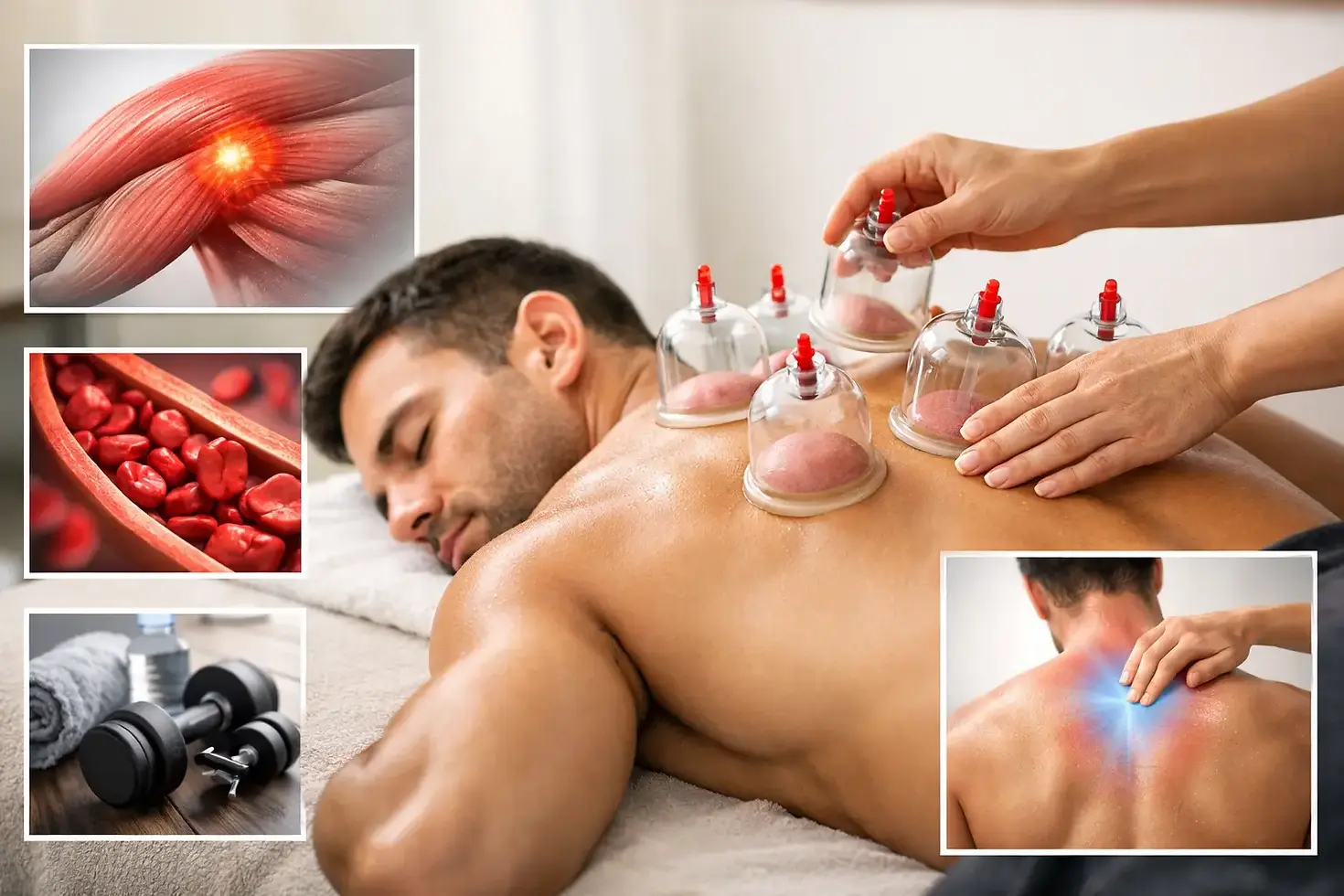
How Cupping Helps Muscle Recovery After Workouts
- Justin Feasel
- 2 days ago
- 5 min read

That tight, heavy feeling after a hard workout is not always a sign that you need to push through. Sometimes it is your body asking for support. Understanding how cupping helps muscle recovery can give active adults and athletes a gentle, natural way to address lingering soreness, restricted movement, and the tension that makes everyday activity feel harder than it should.
Cupping is a time-tested therapy used in East Asian medicine and increasingly welcomed in sports recovery settings. It uses specialized cups to create gentle suction on the skin and underlying tissue. Rather than pressing down into a sore muscle as massage does, cupping lifts the tissue slightly. This different direction of pressure can feel deeply relieving when muscles are overworked, tight, or slow to bounce back.
How Cupping Helps Muscle Recovery
After strength training, a long run, a demanding workday, or a weekend spent in the yard, muscles can develop tenderness and guarding. The body’s natural repair process needs time, rest, nourishment, and healthy circulation. Cupping can complement that process by encouraging local blood flow and helping tight layers of soft tissue move more freely.
When a practitioner places a cup over an area of tension, the suction creates a decompressive effect. Many people describe it as a strong pulling sensation rather than pain. The increased circulation in the treated area may help deliver oxygen and nutrients while supporting the body’s normal process of clearing metabolic byproducts. For someone whose shoulders feel locked after lifting or whose calves are stiff after a race, that shift can create a noticeable sense of lightness and ease.
Cupping may also help reduce the feeling of fascial restriction. Fascia is the connective tissue that surrounds muscles and other structures throughout the body. When it is irritated, dehydrated, or held in a protective pattern after repetitive movement, you may feel stiff even when you have stretched. By gently lifting the tissue, cupping can support mobility in a way that feels different from traditional hands-on bodywork.
The result is not simply about feeling less sore. Better comfort and range of motion can make it easier to return to healthy movement, maintain good form, and avoid compensating with other areas of the body. That matters whether your goal is finishing a training plan, keeping up with your children, or moving through your workday without a nagging ache.
What a Cupping Session Feels Like
A thoughtful treatment begins with listening. Your practitioner will consider where you feel soreness, what type of activity preceded it, your current training load, and any history of injury or health concerns. Cupping may be used on the back, shoulders, hips, thighs, calves, or other areas where muscle tension is present.
With stationary cupping, cups remain in place for several minutes. With moving cupping, a small amount of oil or lotion allows the practitioner to glide the cup across the skin. Moving cupping can feel especially helpful for broad areas such as the upper back, hamstrings, or quadriceps. The pressure should be purposeful but tolerable. You should never feel that you must endure sharp pain to receive a benefit.
It is common for cupping to leave circular red, purple, or dark pink marks. These marks are not bruises in the same sense as an injury-related bruise. They are temporary skin discolorations caused by the suction and the body’s response in the treated area. They often fade within several days, though deeper-colored marks can last a week or two. Their color does not reliably measure how severe a problem is or how successful a session was.
Most people feel relaxed, looser, or pleasantly tired after treatment. Some notice an immediate improvement in mobility, while others experience a gradual change over the next day or two. Recovery is individual. A single session may offer welcome relief, but ongoing tension or a demanding training schedule may respond best to a personalized plan.
When Cupping Can Be Most Helpful
Cupping is often a valuable addition to recovery care when soreness is connected to repetitive movement, intense exercise, or postural strain. Runners may use it for calf, hamstring, hip, or glute tension. Lifters often appreciate support for the shoulders, chest, upper back, and forearms. It can also be helpful for people who are not athletes but carry tension from desk work, driving, caregiving, or physically demanding jobs.
Timing matters. Some people schedule a session after a particularly challenging workout or event, while others incorporate cupping into a regular maintenance routine during heavy training blocks. If you are preparing for a competition, communicate that clearly. Deep or extensive work immediately before an event may not be the right choice for everyone, particularly if marks, tenderness, or fatigue would be distracting.
Cupping is not a replacement for the foundations of recovery. Your body still needs adequate sleep, hydration, protein and nutrient-dense food, appropriate rest days, and a gradual approach to increasing training volume. Think of cupping as one supportive tool within a larger plan for restoring your vitality.
Cupping, Massage, and Acupuncture: A Personalized Approach
No single therapy is the best fit for every type of muscle discomfort. Massage uses direct pressure to soften tight tissues and can be ideal when you want focused work on a specific knot or area. Cupping uses suction and is often chosen when tissue feels bound down, heavy, or difficult to stretch. Acupuncture may be used to help calm pain patterns, support the nervous system, and address the whole-body factors that can influence recovery, including stress and poor sleep.
At The Point Acupuncture Clinic, these approaches can be considered together rather than treated as separate answers. A practitioner may combine cupping with acupuncture, Tui Na, or other gentle therapies based on your goals and how your body is responding. This root-cause perspective is especially useful when recurring muscle tension is connected to biomechanics, stress, insufficient recovery, or an old injury pattern.
Who Should Pause or Ask Before Trying Cupping?
Cupping is generally gentle when provided by a trained professional, but it is not appropriate in every situation. Let your practitioner know if you take blood-thinning medication, have a bleeding disorder, have fragile skin, are pregnant, or have a history of blood clots. Cups should not be placed over open wounds, active skin infections, sunburn, a fresh injury with significant swelling, or areas of known vascular concern.
New or severe pain deserves careful attention. Seek medical evaluation for symptoms such as sudden weakness, numbness that does not resolve, major swelling, chest pain, shortness of breath, fever, or pain following a serious fall or impact. Cupping can support recovery, but it should not delay care for a potentially serious condition.
Getting More From Your Recovery Session
Give yourself permission to slow down after treatment. Drink water, eat a balanced meal, and choose gentle movement such as walking or light mobility work if it feels good. Many people benefit from avoiding another maximum-effort session on the same day, especially after deeper bodywork.
Pay attention to patterns rather than chasing a quick fix. If the same shoulder keeps tightening after every workout, or your low back flares whenever you increase mileage, that information matters. A personalized plan can help you identify whether the issue is training load, movement mechanics, stress, recovery habits, or a combination of factors.
Your body is designed to adapt, repair, and grow stronger with the right support. Cupping offers a calm, practical way to meet muscle tension with care, helping you move forward with more comfort and confidence.


Comments