Can Acupuncture for Endometriosis Pain Help?

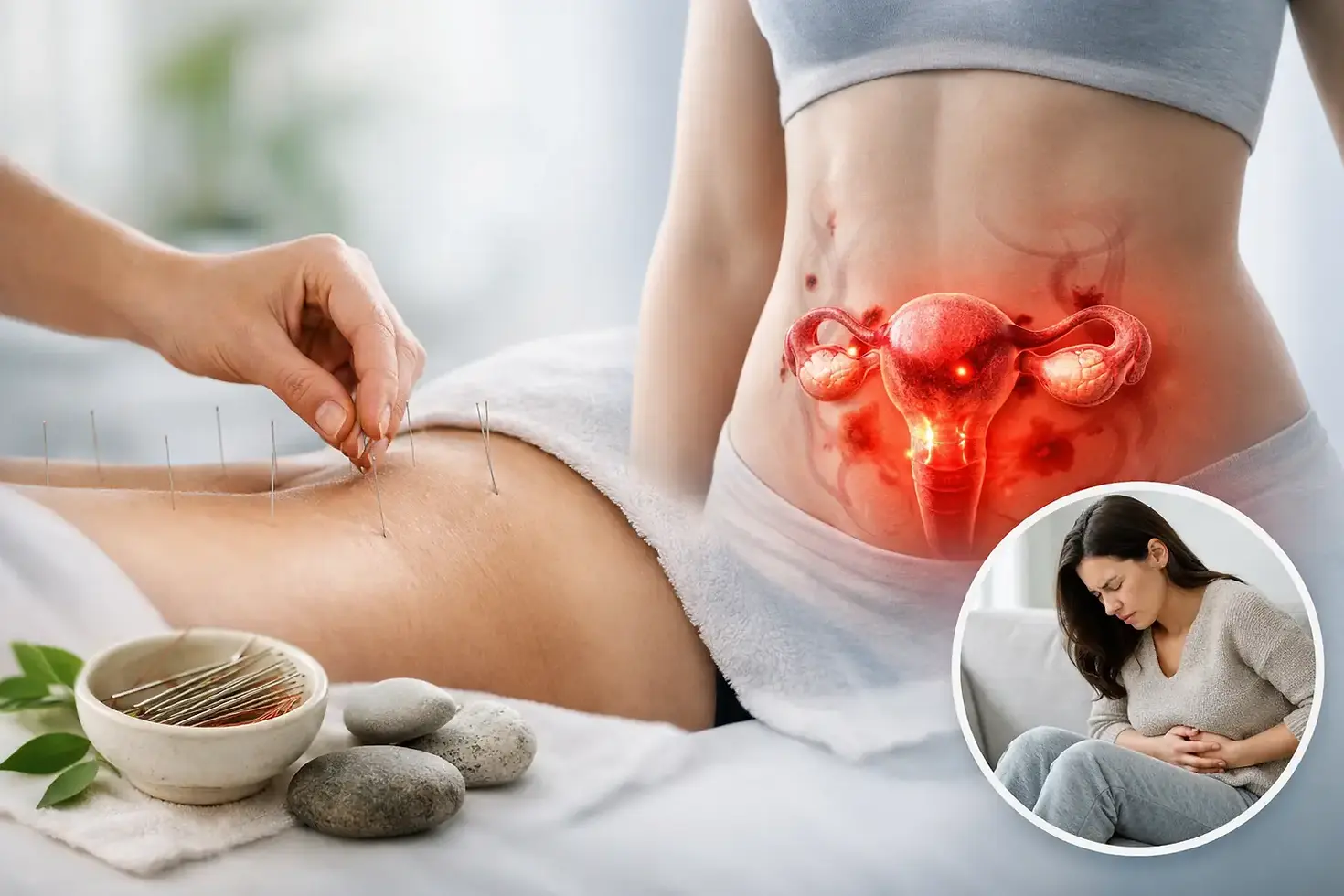
Endometriosis pain can make ordinary plans feel uncertain. A workday, a family outing, exercise, intimacy, or a full night of sleep may all require more calculation than they should. Acupuncture for endometriosis pain offers a gentle, personalized way to support comfort and whole-body balance while you continue working with your medical team.
Endometriosis is a complex condition, and there is no single treatment that works for every person. Some people find meaningful relief through surgery, hormonal treatment, pain medication, pelvic floor therapy, lifestyle changes, or a combination of approaches. Acupuncture is not a replacement for gynecologic care, but it can be a valuable complementary therapy for people who want more support between appointments and beyond symptom suppression.
Why Endometriosis Pain Can Feel So Overwhelming
Endometriosis occurs when tissue similar to the lining of the uterus grows outside the uterus. This can contribute to inflammation, pelvic pain, painful periods, pain during or after sex, bowel or bladder discomfort, fatigue, and fertility challenges. Symptoms vary widely. Some people have extensive endometriosis with relatively mild symptoms, while others experience severe pain that disrupts daily life.
The pain is not always limited to the days of your period. Over time, the nervous system can become more sensitive to pain signals, and muscles in the pelvis, hips, low back, and abdomen may tighten protectively. Stress, poor sleep, digestive upset, and hormonal shifts can add to the burden. That is why care that looks at the whole person can feel so different from simply chasing the next painful flare.
From an East Asian medicine perspective, chronic pelvic pain may be associated with patterns of stagnation, deficiency, excess heat, or disrupted circulation. Rather than giving every patient the same treatment, an acupuncturist considers your pain pattern, cycle, energy, digestion, sleep, stress level, and health history to create care that fits you.
How Acupuncture for Endometriosis Pain May Help
Acupuncture uses very thin, sterile needles placed at specific points on the body. For many people, treatment is deeply calming. You may rest on a comfortable treatment table and notice a light sensation, warmth, heaviness, or no significant sensation at all. The goal is not to push through discomfort. Your care should feel supportive, respectful, and tailored to your needs.
Research on acupuncture for endometriosis is still developing, and results are mixed. That matters. Acupuncture should not be presented as a cure for endometriosis or a reason to delay appropriate medical evaluation. Still, many patients seek it because it may help reduce the intensity or frequency of pelvic pain and related symptoms for some individuals.
A personalized treatment plan may support:
Pelvic, abdominal, low-back, or leg discomfort
Painful menstrual cramping and cycle-related tension
Stress and nervous system overload that can amplify pain
Sleep disruption and fatigue associated with persistent symptoms
Digestive discomfort that may worsen around the menstrual cycle
These potential benefits are often connected. When pain eases even modestly, sleep may improve. Better rest can support resilience, mood, and the ability to move through the day with less fear of the next flare. Relief is not always immediate or linear, especially with a chronic condition, but small shifts can make a meaningful difference in quality of life.
What a Personalized Treatment Plan Can Include
Your first visit should begin with a real conversation. An acupuncturist may ask when your pain began, where you feel it, what makes it worse or better, how your menstrual cycle affects you, and what treatments you have already tried. Your diagnosis, medications, surgical history, fertility goals, and any digestive or emotional symptoms all matter.
Acupuncture points may be selected on the abdomen, legs, arms, hands, back, or ears, depending on your comfort level and clinical needs. Treatment does not need to be aggressive to be effective. If abdominal needling feels too sensitive during a painful flare, there are many other point combinations that may be used.
At The Point Acupuncture Clinic, care may also include complementary therapies when appropriate. Gentle Chinese medical massage, known as Tui Na, can help address tension patterns in the low back, hips, and surrounding muscles. Moxibustion uses soothing warmth at selected points and may be considered when it suits your individual presentation. Nutritional guidance and other supportive services can also help you explore factors affecting energy, inflammation, digestion, and recovery.
The right combination depends on your body, your symptoms, and what feels manageable. A thoughtful plan should never make you feel like you have to do everything at once.
How Often Will You Need Treatment?
Frequency depends on the severity and pattern of your symptoms. When pain is intense or recurring throughout the month, some people begin with weekly visits for several weeks. Others prefer treatment around the time symptoms usually increase, such as before or during menstruation. Once symptoms are more stable, appointments may become less frequent.
Your response is the guide. An honest plan includes regular check-ins: Are periods becoming more manageable? Are you sleeping better? Is the pain less disruptive, even if it is not gone? Are there changes in digestion, mood, or energy? These details help shape the next phase of care.
Acupuncture Works Best as Part of Coordinated Care
Endometriosis deserves thorough medical attention. If you suspect endometriosis or have not yet been evaluated, a gynecologist can help assess your symptoms and discuss diagnostic and treatment options. It is particularly important to seek prompt medical care for new or severe pelvic pain, heavy bleeding, fainting, fever, vomiting, a positive pregnancy test with pain or bleeding, or symptoms that are rapidly worsening.
Acupuncture can fit alongside conventional care. It may be used while taking prescribed medication, after surgery during recovery with your physician's clearance, or while pursuing fertility support. Always tell your acupuncturist about medications, blood thinners, pregnancy, medical conditions, and planned procedures so treatment can be adapted safely.
For some people, the most meaningful progress comes from combining therapies: medical management for the disease itself, acupuncture for pain and stress support, pelvic floor therapy for muscle tension, nourishing meals that are realistic for their lifestyle, and gentle movement that does not trigger a flare. There is no prize for doing care perfectly. The aim is to create more room in your life for comfort, connection, and energy.
Preparing for Your First Acupuncture Visit
Come as you are, but a few simple preparations can help you feel more at ease. Have a light meal beforehand, wear comfortable clothing, and make a note of where you are in your cycle. If you can, track your symptoms for a month or two, including pain location, severity, bleeding, bowel or bladder changes, sleep, and stress. This gives your practitioner a clearer view of the patterns affecting you.
It also helps to arrive with questions. You may want to ask what sensations are normal, how progress will be measured, whether other therapies may be appropriate, and how acupuncture can coordinate with your current treatment plan. You deserve clear answers and care that honors your boundaries.
Will Acupuncture Hurt?
Most people find acupuncture far gentler than expected. The needles are much thinner than those used for injections. You may feel a brief pinch, dull pressure, tingling, or warmth, but treatment should not feel sharply painful. Tell your practitioner immediately if anything feels uncomfortable. Adjustments can be made.
Can Acupuncture Help if I Am Trying to Conceive?
It may be a supportive part of an integrative fertility plan for some people with endometriosis, particularly when stress, sleep, cycle symptoms, and overall well-being need attention. However, it does not replace fertility evaluation or treatment when that care is needed. Your plan should reflect your medical history and reproductive goals.
Living with endometriosis can be exhausting, especially when others cannot see the pain you carry. Gentle, individualized support can help you reconnect with your body instead of bracing against it. You deserve a care plan that takes your pain seriously and helps you move toward steadier, more livable days.


Comments