
Best Treatments for Tennis Elbow That Last

A coffee mug hurts to lift. Shaking hands sends a sharp ache through the outside of your elbow. Your backhand may be the least of your concerns. The best treatments for tennis elbow do more than quiet the pain for a few hours - they help restore your forearm's capacity to handle the activities that matter to you.
Despite its name, tennis elbow affects gardeners, parents, tradespeople, desk workers, golfers, pickleball players, and anyone whose wrist and grip are repeatedly under strain. The condition is commonly called lateral epicondylitis, though many clinicians now use the term lateral elbow tendinopathy. In plain language, the tendons that connect your forearm muscles to the outer elbow have become irritated and less able to tolerate their usual workload.
Healing is rarely about finding one magic treatment. It is about reducing the irritation, rebuilding strength at a manageable pace, and looking at the habits or body mechanics that may be keeping the area aggravated.
Best treatments for tennis elbow start with the right load
When an elbow is painful, the instinct is often to either push through completely or stop using the arm altogether. Neither extreme is usually ideal. Continuing a painful activity at full intensity can keep stressing sensitive tissue, while prolonged rest can leave the forearm weaker and more reactive when you return to normal life.
A better first step is relative rest. For a few weeks, reduce or modify the movements that reliably trigger pain, especially repetitive gripping, heavy lifting with the palm down, forceful twisting, and long stretches of mouse or tool use. This may mean using a lighter pan, changing how you carry grocery bags, taking shorter work breaks, or temporarily adjusting your racquet grip and playing schedule.
Pain is useful feedback, not a personal failure. Mild discomfort during recovery can be acceptable, but sharp pain, worsening pain afterward, or symptoms that remain noticeably flared the next day are signs that the load may be too high. A personalized plan helps you make those adjustments without giving up everything you enjoy.
Rebuild forearm strength gradually
Tendons need appropriate movement and progressive resistance to become more resilient. Once the most irritable phase begins to settle, targeted exercise is often one of the most valuable parts of recovery. The goal is not to do random wrist exercises until the pain disappears. The goal is to steadily train the muscles that extend your wrist, support your grip, and control the elbow during daily tasks.
Begin with gentle isometric work
Isometric exercises involve contracting a muscle without moving the joint. For tennis elbow, this may look like gently pressing the back of your hand into your other hand or against a stable surface while keeping the wrist still. These contractions can be a comfortable way to introduce load when movement is still sensitive.
Progress to slow resistance exercises
As tolerance improves, slow wrist-extension exercises with a light dumbbell, resistance band, or even a small household item can help build capacity. A clinician may also include controlled lowering exercises, often called eccentric training, as well as grip and shoulder-strengthening work.
Form and dosage matter. Starting with too much weight or too many repetitions can prolong a flare. Starting too gently and never progressing may not create enough change. This is why a guided plan is especially helpful when symptoms have lasted for months or keep returning.
Use acupuncture and hands-on therapies to support relief
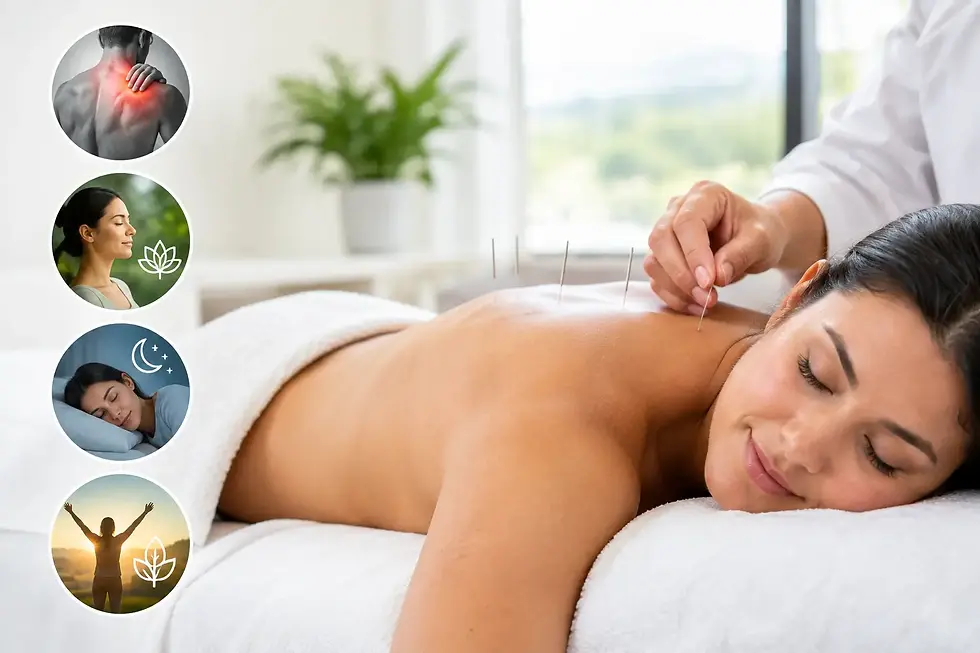
For people seeking a natural, non-invasive approach, acupuncture can be a useful part of an integrative tennis elbow care plan. Fine needles may be placed around the elbow and forearm, as well as in areas that support circulation, muscular relaxation, and the body's pain-regulation response. Many people find treatment calming, and it can make it easier to participate consistently in the strengthening and movement work recovery requires.
Acupuncture is not a substitute for addressing repeated strain, but it may help reduce pain sensitivity and muscle tension while the tendon heals. Treatment frequency depends on the severity and duration of symptoms, your activity demands, and how your body responds.
Chinese medical massage, or Tui Na, can also be used to address tightness and restriction in the forearm, wrist, upper arm, shoulder, and neck. The painful spot at the elbow is not always the whole story. A stiff wrist, overworked grip muscles, limited shoulder control, or tension from hours at a keyboard may all change how force travels through the arm.
Depending on your needs, complementary therapies such as cupping, gentle laser acupuncture, or moxibustion may be considered. These options should be selected thoughtfully, not added simply because more treatment sounds better. The right plan is the one that supports your comfort, function, and ability to return to meaningful movement.
Check the habits that keep the elbow irritated
Tennis elbow often develops gradually because the tissues are being asked to do slightly more than they can currently recover from. That excess may come from a new workout, a home renovation project, a busy season at work, or simply a small ergonomic issue repeated hundreds of times a day.
Consider your grip. Holding tools, weights, or racquets too tightly can place unnecessary demand on the forearm. If you work at a computer, make sure your mouse and keyboard allow your wrist to stay relatively neutral rather than bent upward or sideways. Short breaks to open and close the hands, roll the shoulders, and change position can be more helpful than one long stretch at the end of the day.
For athletes, technique and equipment deserve attention. A racquet with the wrong grip size, worn strings, a sudden jump in playing time, or poor shoulder and trunk mechanics can all shift more stress into the elbow. Returning to a sport gradually is usually more successful than waiting until you are completely pain-free and then jumping back into full play.
A counterforce strap or wrist brace may provide temporary comfort for some people during aggravating tasks. It can be a useful tool, but it should not become the entire strategy. Bracing does not replace rebuilding strength or changing the activity pattern that caused the problem.
Be thoughtful about medication and injections
Over-the-counter anti-inflammatory medication may offer short-term relief for some adults, but it is not appropriate for everyone. Stomach, kidney, heart, bleeding-risk, and medication-interaction concerns should be discussed with a qualified medical professional. Topical anti-inflammatory options may be another consideration for some people.
Corticosteroid injections can sometimes reduce pain quickly, particularly when symptoms are intense. The trade-off is that relief may be temporary, and repeated steroid injections around tendons can carry risks. They are not always the best long-term answer for a condition rooted in tendon capacity and repetitive load.
Other medical treatments may be appropriate in certain cases, especially when conservative care has not helped. The key is to understand the goal, expected benefit, possible downside, and how the treatment fits into a broader rehabilitation plan. Fast pain relief can feel like healing, but lasting progress usually asks for a little more patience.
Know when to seek further evaluation
Most cases of tennis elbow improve with consistent conservative care, but persistent pain deserves careful assessment. Pain can sometimes be referred from the neck, shoulder, or nerves in the arm. Arthritis, joint issues, or other conditions may also create similar symptoms.
Seek medical evaluation promptly if you have significant swelling, redness, warmth, fever, a sudden injury with bruising or deformity, marked weakness, numbness or tingling, or difficulty using the hand. It is also wise to seek guidance if your symptoms have not improved after several weeks of thoughtful self-care, or if pain is interfering with sleep, work, or daily living.
At The Point Acupuncture Clinic, care can be tailored to the person behind the painful elbow - including activity demands, stress load, movement patterns, and the wider health factors that influence recovery. You deserve a life with less pain and more confidence in what your body can do.
Your elbow does not need to dictate how you work, play, cook, exercise, or care for the people you love. Give it the right combination of relief, gradual loading, and attentive support, and let each small improvement become evidence that your body can recover.


Comments